
 03 8384 7083
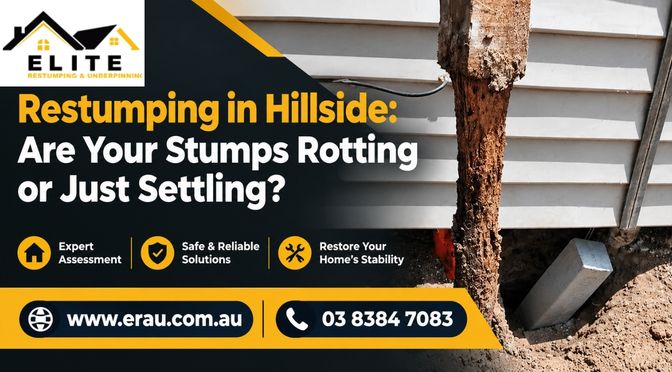
Sticking doors and cracked walls can worry any homeowner. Many people cannot tell if their stumps are rotting or just settling. The difference matters, because one needs a quick check and the other needs repair. Quick answer: settling is often slow and minor, while rot is damage that needs prompt attention.
What Do Stumps Do?
Stumps hold your floor and walls off the ground. They share the weight of your home evenly. Over time, soil movement and moisture can change how they sit. Timber stumps can rot, and concrete stumps can crack or sink.
Signs Your Stumps May Be Settling
Settling happens when the ground shifts under your home. Look for these signs:
- Sticking doors and windows
- Small cracks in plaster or cornices
- Sloping or uneven floors
- Gaps between walls and skirting boards
Settling is often slow. Still, a professional inspection helps you know for sure.
Signs Your Stumps May Be Rotting
Rot is damage caused by moisture, pests and age. Check for these clues:
- Soft or crumbling timber when pressed with a screwdriver
- Damp smells under the house
- Termite activity or mud trails
- Stumps that look thin or hollow
Rot weakens support quickly, so do not ignore it.
Settling vs Rotting: What Is the Difference?
Settling usually moves your home slowly. Rot damages the stump itself. Sometimes both problems happen together. Because it is hard to tell by sight, expert advice from Restumping in Hillside professionals is wise. A trained eye can spot issues you might miss.
Can You Check Safely at Home?
You can do a simple check from outside. Walk around your home and look for:
- Leaning or sunken stumps
- Pooling water near the base
- Uneven floors when you walk inside
Do not crawl under the house if it feels unsafe. Call a professional instead.
What Happens During Restumping?
Restumping replaces or resets worn stumps to level your home. The team gently lifts the floor and fits new concrete or steel stumps. They then check that your floors are level. Many homeowners book Restumping services in Hillside to handle this safely. Good teams explain each step before they start.
How to Choose the Right Team
A careful choice protects your home. Ask about these things:
- Licences and insurance cover
- Clear, written quotes
- Experience with your type of home
- Work warranty
- How they handle council requirements
A reliable Restumping company in Hillside, will answer every question openly. They should never pressure you to decide quickly.
How to Protect Your Stumps
Good habits can slow damage. Keep drains clear and fix leaking pipes. Make sure your subfloor ventilation is working well. Book regular termite inspections too. Ask a provider of Restumping services Hillside how often to inspect your home.
When Should You Act?
Do not wait if cracks keep growing or floors keep sinking. Early action often means smaller repairs. A trusted Restumping company in Hillside can inspect your stumps and explain your options clearly.
Conclusion
Settling and rot can look alike, but they are not the same. Knowing the signs helps you act early. A proper inspection gives you peace of mind.
Worried about your floors? Talk to Elite Restumping & Underpinning today.
- Call 0419 440 891 or 03 8384 7083.
- Email info@erau.com.au.
- Visit erau.com.au to learn more.
Frequently Asked Questions
- What is restumping?
It means replacing or resetting worn stumps under your home. This helps level and support your floors. - How do I know if my stumps are rotting?
Soft, crumbling or hollow timber is a warning sign. Damp smells and termites can also point to rot. - Is settling dangerous?
Minor settling is often not urgent. Still, it can worsen over time, so get it checked. - Can sticking doors be caused by settling?
Yes, shifting stumps can twist door frames. Weather changes can also cause sticking, so inspect to be sure. - How long do stumps last?
It depends on the material and conditions. Moisture, pests and soil movement can shorten their life. - Do I need to move out during restumping?
Often you can stay home. Your provider can explain what to expect for your property. - How long does restumping take?
It depends on the size and condition of your home. Ask your provider for a clear timeline. - Can restumping fix cracks in my walls?
It can stop movement that caused the cracks. Cosmetic repairs are usually done afterwards. - Do I need council approval for restumping?
Requirements can vary. A good provider can advise you on any approvals needed. - How often should I inspect my stumps?
A yearly check is a smart habit. Inspect sooner if you notice cracks or uneven floors.